
PolyBuzz: Chat with AI Friends
CLOUD WHALE INTERACTIVE TECHNOLOGY LLC.Entertainment
4.056.92K Reviews
- Version
- 2.2.82
- Installs
- 50.00M
- Age Rating
- Mature 17+
Screenshots

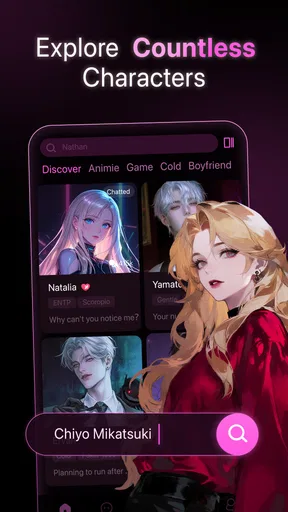

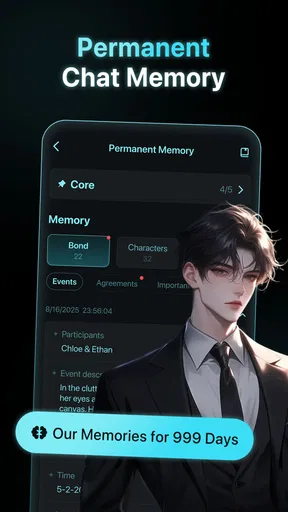
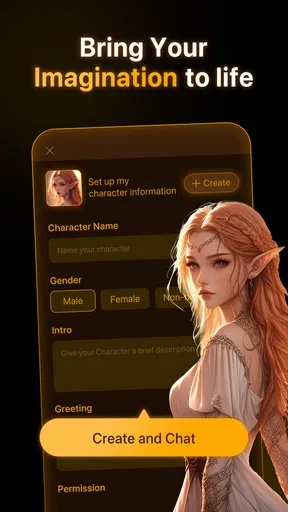

Our Review of PolyBuzz: Chat with AI Friends
 Analysis by Appyee
I opened PolyBuzz: Chat with AI Friends expecting a lightweight entertainment app, but its appeal became clearer after I used it as a repeatable conversation space rather than a one-off novelty. It lets me chat with anime-style characters, explore different personalities, and build ongoing role-play stories whenever I have a few spare minutes. That makes it more flexible than a simple chatbot, although the experience depends heavily on choosing the right character and guiding the conversation well.
This is a free entertainment app from CLOUD WHALE INTERACTIVE TECHNOLOGY LLC. It is aimed at adults, with a Mature 17+ rating, and runs on Android 7.0 or later. The app has reached over 50 million installs, so it is not a niche experiment with a tiny audience. Its average rating is 4.1 from around 1.2 million ratings, which feels consistent with my impression: many people enjoy the character-driven format, while others will find the conversations uneven or too dependent on personal taste.
How I use PolyBuzz from the first chat onward
The basic workflow is simple. I browse for a character that matches the mood I want, open a conversation, and begin with a clear prompt instead of a vague greeting. A short setup such as “keep this as a relaxed mystery story and let me make the important decisions” gives the exchange more direction than “tell me a story.” The app works best when I treat the first few messages as scene-setting rather than expecting an instantly perfect performance.
For casual use, I might start a conversation during a commute, while waiting for an appointment, or before bed. I can ask for playful dialogue, a dramatic scenario, or an anime-inspired exchange without needing to prepare anything outside the app. The entertainment comes from responding to the character and seeing how the conversation develops, not from completing a fixed objective as I would in a conventional game.
That distinction matters. PolyBuzz is closer to interactive character entertainment than to a traditional social network or a story game with a guaranteed ending. There is no need to win, level up, or follow a prescribed route. I decide how serious, silly, romantic, dramatic, or imaginative the exchange becomes. If I want a more satisfying result, I need to contribute some direction instead of passively waiting for the app to entertain me.
My most reliable routine is to establish three things early: the setting, the character’s role, and the kind of response I want. For example, I can define a school festival setting, ask the character to play a rival, and request short dialogue with occasional choices. This reduces the chance of the chat drifting into a generic conversation. It also makes returning to the same story easier because I have created a recognizable frame rather than a sequence of disconnected questions.
A useful everyday scenario is a short creative break. If I have ten minutes, I can continue a detective scene and stop at a natural cliffhanger. Later, I return with a reminder of the unresolved clue and continue from there. This is more enjoyable than opening a random character every time because the small amount of continuity gives the interaction a reason to continue.
At the same time, I would not use it as my main tool for factual research, important decisions, or dependable personal advice. The character format encourages imagination and improvisation, not careful verification. When I want a precise answer, a dedicated reference or productivity app is a better choice. PolyBuzz earns its place when the goal is conversation, escapism, and creative play.
Choosing characters without wasting time
The character choice has a bigger effect on quality than I initially expected. I get better results when I select someone whose apparent personality fits the scene I want to create. A reserved character can work well for a slow-burn mystery, while an energetic one may be more entertaining for comedy or fast dialogue. Picking a character only because the artwork looks appealing can lead to a mismatch once the conversation starts.
I also avoid beginning with a request that contains too many unrelated demands. A character asked to be funny, frightening, poetic, realistic, and extremely detailed at the same time may produce an unfocused exchange. I prefer one main direction and then adjust it after seeing the first few replies. This is one of the simplest ways to make the app feel less random without pretending that every response will be perfect.
For longer sessions, I keep the premise narrow enough to remember. “We are preparing for a dangerous audition and hiding a secret” is easier to maintain than a complicated backstory with numerous names and rules. When the chat starts wandering, I restate the central conflict in one sentence. That small reset often works better than sending a long explanation that introduces even more details for the character to lose track of.
Settings and habits worth checking before settling in
I recommend spending a moment looking through the available app controls and conversation options before starting a serious story. The exact experience can change depending on how the app presents its character discovery, chat navigation, and account-related choices. I pay attention to what is easy to find, how quickly I can return to an existing conversation, and whether the current setup suits a private, casual session or a longer creative exchange.
The Mature 17+ label is important, not decorative. I would not hand this app to a child, and I would be careful about using it around other people if the conversation could become personal or adult-oriented. Anyone sharing a device should also consider who might see the chat history. This is an entertainment app built around character interaction, so users should approach it with the same awareness they would bring to any app involving personal conversations.
The free entry point makes experimentation easy, but the in-app purchase range is broad, from a few cents to nearly three hundred dollars per item. I would not begin by buying anything. I would first test whether the free experience actually suits my preferred characters and conversation style. If a paid option appears, I would check exactly what it changes before confirming, especially if I am only using the app occasionally.
This is also where I think experienced users benefit from a simple rule: separate curiosity from commitment. I can browse, try several characters, and learn how the conversations behave without treating every attractive option as something I need to unlock. The app is much easier to judge when I evaluate the quality of the interaction itself rather than being distracted by the possibility of extra content.
The current version is 2.2.60, and the app supports Android 7.0 and newer. For most people with a compatible Android device, installation should not be the main obstacle. The more meaningful question is whether the phone’s owner is comfortable with a Mature 17+ entertainment experience and with the app’s purchase structure. Those are practical considerations I would settle before investing time in elaborate stories.
Faster conversation patterns that produce better results
My favorite shortcut is to give the character a compact “scene card” at the beginning. I include the location, relationship, immediate problem, and preferred response style in a few sentences. For example: “We are old friends meeting at a closed train station. Something is missing. Keep the mood tense, use brief replies, and let me decide what to investigate.” This gives the chat useful boundaries without turning the opening into a technical instruction manual.
Another effective habit is to ask for one beat at a time. Instead of requesting an entire chapter, I ask the character to describe the next moment and stop before deciding what my character does. That preserves my control and makes the exchange feel more interactive. It also reduces the disappointment that comes from receiving a long response that resolves the most interesting part before I have had a chance to participate.
When a reply misses the tone, I correct it directly and briefly. “Keep the character cautious, not hostile” is more useful than saying “that is wrong.” I can also restate the current goal if the conversation drifts. These small corrections are not a sign that the app has failed; they are part of using a generative character system. Still, users who want a perfectly consistent script with no steering may find this tiring.
I get more mileage by reusing a successful setup with a different character rather than starting from nothing every time. The same basic scenario can reveal how two personalities handle conflict, humor, or uncertainty. That turns the app into a kind of interactive comparison exercise. It is a more deliberate use than endlessly scrolling through characters, and it helps me discover which styles I actually enjoy.
For quick entertainment, I use a three-message loop: establish a situation, introduce a complication, then ask the character to offer a choice. I make my decision and stop when the exchange reaches a satisfying pause. This pattern fits short breaks and prevents the session from becoming an unfocused stream of greetings. It also gives me a clear answer to the common question, “What am I supposed to do in this app?” I create a small scene and participate in it.
For creative writing, I treat the chat as a brainstorming partner rather than a final author. I can ask a character to suggest a conflict, challenge a plot idea, or role-play a difficult conversation. Then I keep the parts I like and rewrite them myself. This is more productive than copying every response, because the app’s improvisation can be uneven even when it sparks a useful direction.
Where the experience reaches its limits
The biggest limitation is consistency. A character may sound distinctive in one exchange and more generic in another. Details can also become less reliable as a story grows, especially when the conversation contains many names, relationships, or rules. I can reduce this problem by summarizing the important facts, but I cannot remove the need for occasional correction.
There is also a difference between apparent companionship and real human connection. The characters can respond in a warm or engaging way, but I would not treat that as a substitute for trusted friends, family, or professional support. The app is enjoyable precisely because it lets me shape an artificial interaction. That freedom should not be confused with the responsibilities and unpredictability of a real relationship.
Some users may dislike the lack of a firm endpoint. A conventional visual novel gives me authored scenes, polished pacing, and a known route. A typical messaging app gives me real people and spontaneous conversation. PolyBuzz sits between those experiences: it offers character-focused interaction without the guaranteed writing quality of a finished story or the authenticity of a human chat. Whether that feels liberating or unsatisfying depends on what I want from entertainment.
I would also skip it if I am looking for a competitive game, a deep progression system, or a reliable tool for organizing daily tasks. The app’s strength is open-ended dialogue, not achievement tracking or practical utility. Likewise, someone who dislikes anime-inspired character presentation may not connect with its central style, even if they are generally interested in conversational AI.
Privacy and spending awareness are part of using it responsibly. I avoid entering sensitive personal details into a recreational character chat, and I do not assume that an entertaining response is a secure place for confidential information. I also keep the purchase range in mind and pause before confirming any item. These habits do not reduce the fun; they keep the app in its proper role as optional entertainment.
Who will enjoy it most
I think PolyBuzz is a strong fit for people who enjoy anime characters, improvisational role-play, and stories that change according to their replies. It is especially appealing to users who like experimenting with tone and scenario design. If you enjoy writing prompts, testing personalities, or turning a spare moment into a small fictional scene, you will probably find more depth here than someone who only sends casual greetings.
It can also work for shy users who want to practice expressing an idea before sharing it with another person, provided they remember that the interaction is artificial. A user might rehearse a difficult fictional conversation, explore how different personalities respond to a conflict, or develop dialogue for a creative project. I would describe those as useful exercises, not replacements for real communication or expert guidance.
On the other hand, I would recommend a conventional streaming app to someone who wants passive entertainment, a messaging app to someone seeking real social contact, and a dedicated writing tool to someone building a carefully edited novel. PolyBuzz is best when I want to participate. The need to guide the conversation is part of its appeal, but it is also the main reason it will not satisfy everyone.
After using it with repeatable prompts, short scene structures, and a cautious approach to purchases, I see why the app has attracted a large audience. It makes character interaction immediate and gives me enough control to turn a simple chat into a continuing story. The experience is not flawless, and I have to steer it when continuity or tone slips, but that is a manageable trade-off for flexible, on-demand role-play.
My recommendation is straightforward: try the free experience if you want interactive anime-style conversations and are happy to guide the story yourself. Start with a small scenario, test several characters, and decide whether the responses remain enjoyable before spending anything. Skip it if you need factual reliability, real companionship, polished authored plots, or a traditional game structure. For the right user, PolyBuzz is a playful creative outlet; for everyone else, its open-ended design may feel more like work than entertainment.
Verdict
Strengths of PolyBuzz: Chat with AI Friends
- Large variety of AI personalities and conversation styles
- Easy-to-use interface with quick access to favorite characters
- Supports creative roleplay, storytelling, and casual conversations
- Character discovery makes it simple to find new chat experiences
- Conversations can provide entertainment whenever you need it
Limitations of PolyBuzz: Chat with AI Friends
- Some characters may give repetitive or predictable replies
- AI responses can occasionally be inaccurate or out of context
- Mature themes may appear depending on the selected character
- The best experience may require in-app purchases or subscriptions
- Privacy concerns may matter when sharing personal details in chats
Similar Picks in This Category
View All
Google Play Games
Google LLC3.9

Netflix
Netflix, Inc.4.8

YouTube Kids
Google LLC4.2

Disney+
Disney4.4

Prime Video
Amazon Mobile LLC4.7

Steam
Valve Corporation3.2
Frequently Asked Questions
What is PolyBuzz: Chat with AI Friends?
PolyBuzz: Chat with AI Friends is an AI chatbot and role-playing app where you can interact with virtual characters through text conversations. The platform includes a wide variety of personalities and fictional profiles, allowing users to enjoy casual chats, storytelling, role-play scenarios, and companion-style conversations. Responses are generated by artificial intelligence, so the quality and personality of each interaction can vary depending on the character and conversation context.
Is PolyBuzz: Chat with AI Friends free to use?
PolyBuzz can generally be downloaded and used without an initial payment, but some features may be limited or supported by in-app purchases, subscriptions, advertisements, or usage restrictions. Access to certain characters, premium functions, longer conversations, or additional customization options may depend on the current plan offered in the app. Before subscribing, check the pricing, renewal terms, and cancellation procedure shown in your app store.
Can I create my own AI characters in PolyBuzz?
The app may allow users to create or customize AI characters by choosing details such as a name, personality, background, appearance, and conversation style. This feature is useful for building original role-play experiences or designing a virtual companion with specific traits. However, available creation tools and publishing options can differ by version, account type, region, or platform, so review the in-app settings before sharing a character publicly.
Is PolyBuzz suitable for children and teenagers?
Parents should review PolyBuzz’s age rating, content labels, and privacy information before allowing a child or teenager to use it. AI character platforms can include mature themes, romantic role-play, emotionally intense conversations, user-created content, and unpredictable responses. Because generated messages are not always perfectly filtered, younger users should have appropriate supervision, and parental controls or device-level restrictions should be enabled when necessary.
Does PolyBuzz protect my conversations and personal information?
You should avoid sharing sensitive information such as your full name, address, passwords, financial details, school information, or private photographs during AI conversations. Like other online services, PolyBuzz may collect account, device, usage, and conversation-related data according to its privacy policy. Read the latest policy and app permissions before creating an account, and remember that AI chats should not be treated as completely private or as a replacement for professional advice.
